
1.18. Parallel World - Part 1
Thirty centimeters was all that separated us. A divorce hearing in a small European town. And yet, another room existed at the same time. This is the first act of Parallel World.

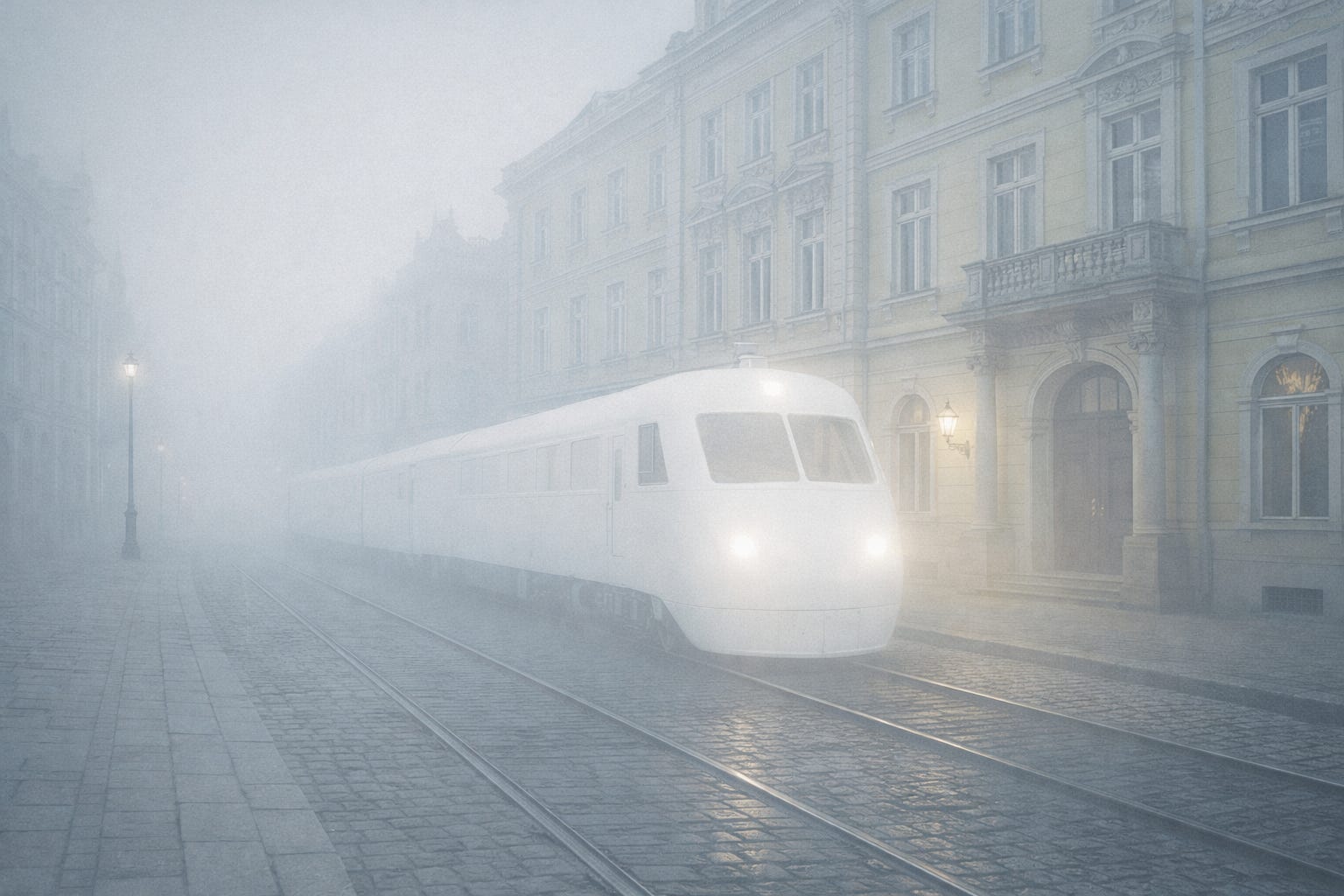
1. The Day the White Train Stopped
Ever since that tea gathering (If you’d like to read about that tea gathering, 1.17. Tea Party - Two, is here), things had begun to move forward.
It felt as if the overdose of caffeine from that afternoon had become an engine, driving the white train I was riding. On 29 September, the white train finally pulled in and stopped in front of a building.
At 7:55 a.m., the city was quiet. The air held the thin chill of an early autumn morning, and the only sound that felt out of scale was the thud of my own heartbeat. I stood in front of a pale yellow, vaguely European façade, waiting for the interpreter and the lawyer.
In a few hours, inside this building, my daughter would choose to live with her father or her mother. Under Czech law, the wishes of any child over twelve are given priority. She had just turned twelve.
I was, as always, five minutes early. I have spent half my life abroad, yet the habit of arriving five minutes before the appointed time refuses to leave me. On this particular morning, those five minutes stretched into something close to eternity.
I did not want to go in.
I did not want to hear her answer.
The interpreter and lawyer were nowhere in sight. I tilted my head and studied the buildings.
In this part of Europe, the houses lean into one another, pressed shoulder to shoulder, like people on a crowded tram. In Japan, even between detached houses, there is always a sliver of space, even if it is only thirty centimetres wide. A gap for wind to pass through, for light to slip in. A distance that lets breath pass through.
Here, buildings and people alike tend to touch, to lean in. In Japan, both houses and hearts instinctively take half a step back. Somewhere in my blood, I realised, that narrow thirty-centimetre margin still flowed quietly on.
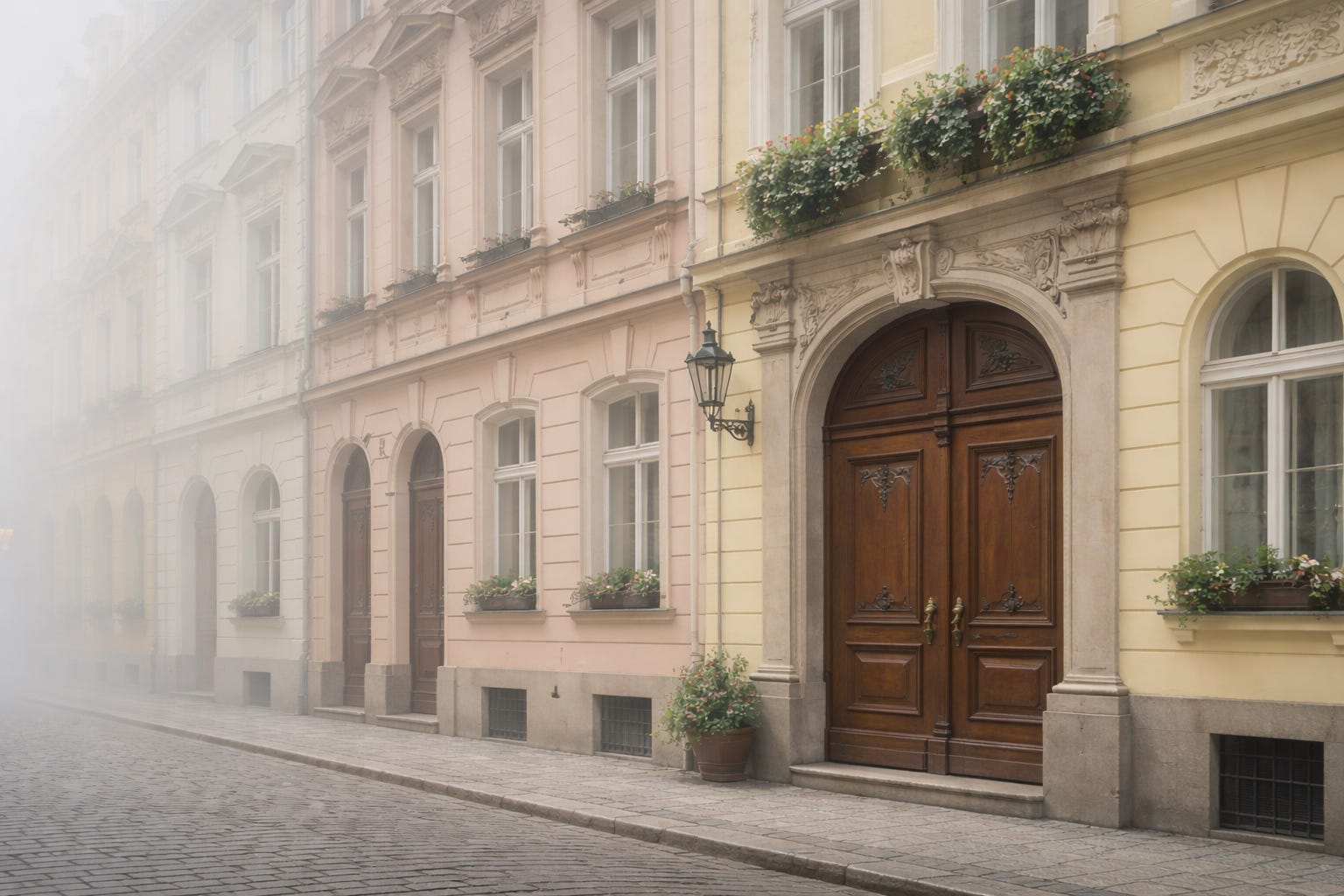
In the Czech town where I live, cream spreads its wings across the streets. Each building owns a sturdy pair of wooden doors, carved with its own particular flourish. In Czech, the word for “door” exists only in the plural. A door cannot come into being alone.
I remembered the daydream I had had at the tea gathering. The green gate was smothered in ivy, and beyond it was a doorway. Perhaps that, too, was made of two panels. Maybe the doors of the heart can never be opened by a single person.
2. Thirty Centimetres of Silence
“Dobré ráno.”
The interpreter and the lawyer appeared.
We pushed open the heavy door and stepped inside. We were shown into a nearby meeting room, where an elderly gentleman was already seated. He must be the mediator. We exchanged brief introductions and shook hands.
I took the chair opposite him. The interpreter sat to my left. The mediator indicated the seat on my right. My husband was to sit there later, no more than thirty centimetres away. I had once read that the distance most people require for physical comfort is around seventy centimetres. The chair he indicated was barely half of that.
Even before my husband arrived, the closeness felt unmistakable. Too close.
An image surfaced in my mind. In Japan, even when walls stand between houses, a narrow gap is always left. A passage for light. A channel for air. A margin that allows one structure to exist without pressing against another.
Here, in Europe, walls touch walls. Buildings lean into one another without hesitation, as if connection alone were enough.
Sitting there, I realised that my body was asking for the distance it had learned long before thought. Perhaps it was my Japanese blood, quietly insisting that even when walls exist, space still matters.
My lawyer chose a seat slightly apart. The space she kept brought me an unexpected sense of relief. From there, she could observe everything without being drawn into it, and I trusted her to remain there.
The air in the room was cool. I took off my coat anyway, reached into my bag, and placed a notebook on the table in front of me.
The vivid light-blue cover flashed up at me.
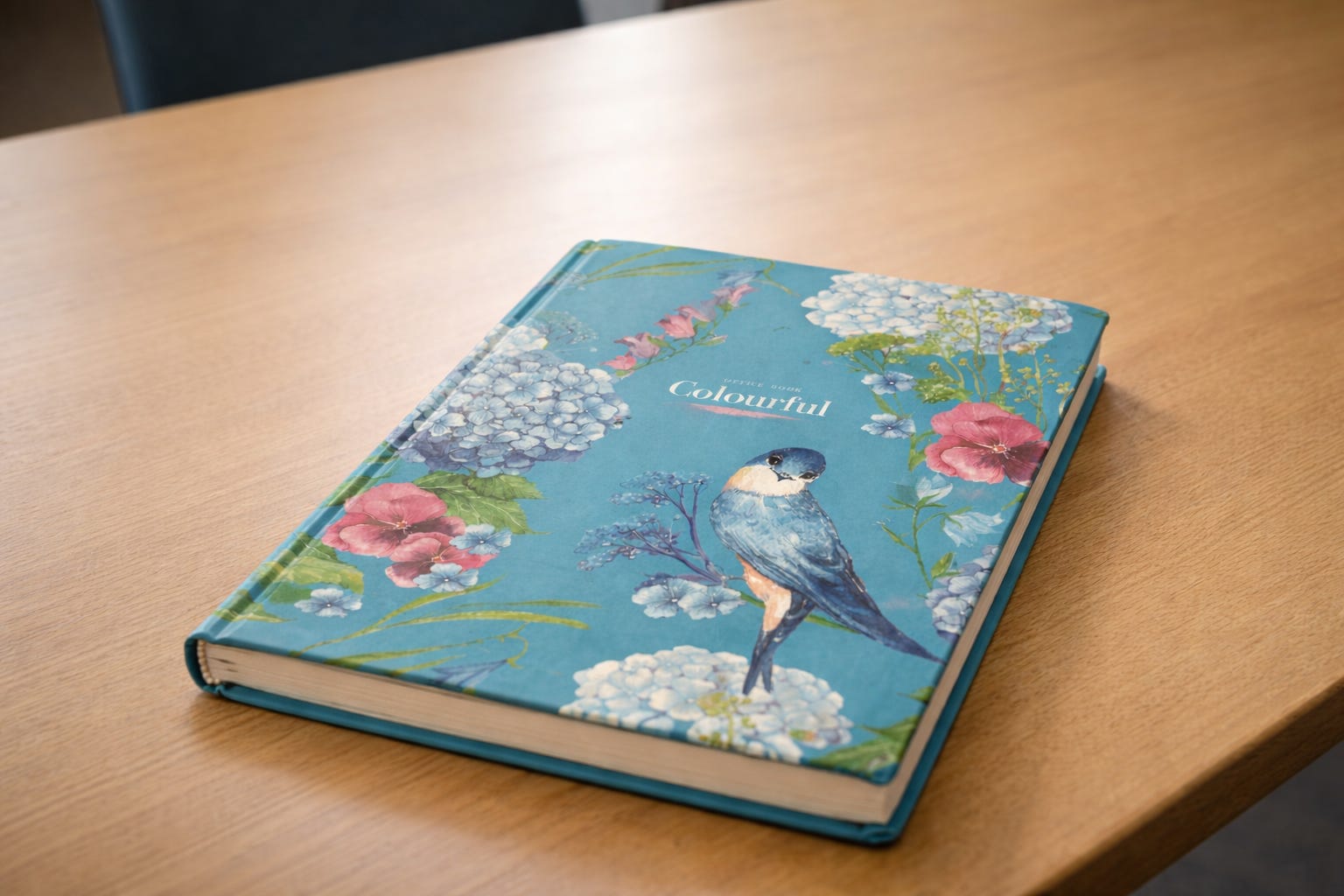
From among a profusion of flowers blooming in the depths of blue, a small bird with sky-coloured wings gazed quietly at me. It seemed like a gentle guardian of some secret garden, whispering that this was not a place of fear but a place where, for a moment, I might rest. I felt my imagination stir.
3. Through the Narrow Door
I opened the hardcover. A message leapt out.
DO ALL THINGS WITH LOVE
I caught my breath and lifted my eyes.
The mediator was looking straight at me. He said nothing, but I thought I saw the corner of his mouth twitch slightly.
Ichi-go ichi-e. 一期一会
The phrase brushed my chest the way an old tea-room door slides quietly open.
In a traditional Japanese tearoom, one enters through a tiny doorway called the nijiriguchi. An adult must stoop, bending the back and ducking the head, just to pass through. In that small opening, Sen no Rikyū, the greatest of tea masters, left a silent promise.
Titles, ranks, the hunger to win or to be right – all are to be left outside the door.
Inside, everyone sits at the same height, watches the same steam rise, and receives the same single bowl simply as “a guest.” Samurai, of course, had to remove their swords.
I pictured that door.
If this place were a tea room today, my anger, my attachment to being right, and even the scale that measures who has suffered more would have to remain outside its threshold.
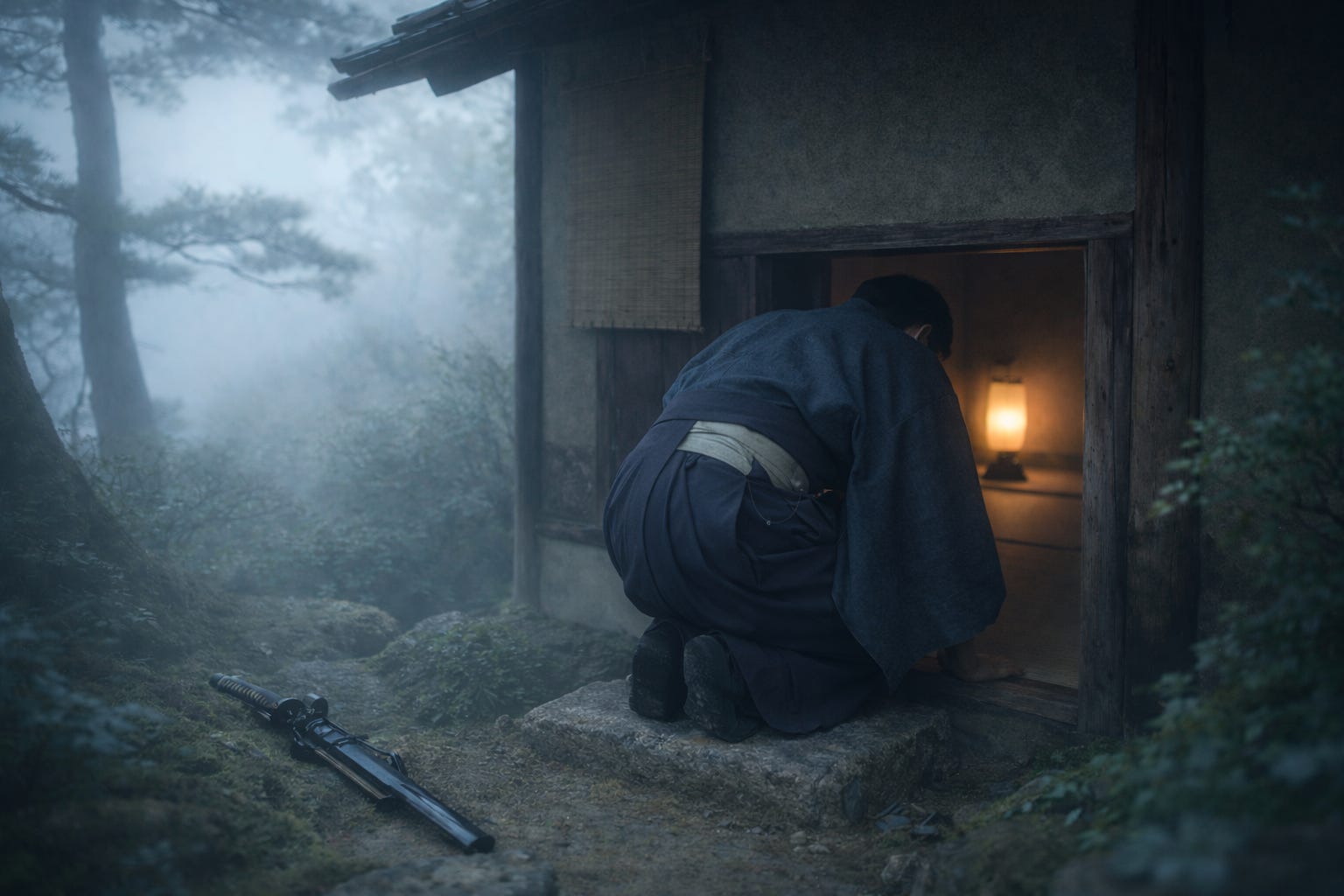
The nijiriguchi measures approximately sixty-seven centimetres in height and sixty-four centimetres in width. I made myself small, grew quiet, and chose to sit as a guest, sincerely facing this meeting.
Perhaps that was the “etiquette of the heart” that this bluebird, as a guardian of gentleness, was guiding me toward.
I looked once more at the bluebird drawn on the aquamarine notebook.
Ichi-go ichi-e.
I moved my lips and whispered the words silently, gently.
The teaching that “this moment will never come again” is the core of the tea spirit. Even if you sit with the same people in the same place, today’s air, today’s trembling of the heart, will never return in the same shape. That is why we offer respect to the person before us and meet them with our whole attention. I found myself remembering this now.
I drew a deep breath. The tension began to slowly drain from my body.
Today, the host of this tea gathering was the elderly mediator sitting in front of me. My imagination, quite naturally, laid the figure of an aged Sen no Rikyū over his shoulders.
Then one of Rikyū’s most famous stories rose in my mind.
It is said that after he had swept the garden absolutely clean, he would deliberately gather a handful of dry leaves and scatter them, softly, like wind.
Leaves translucent with gold,
leaves ripened to a dull red,
leaves as light as scraps of brown paper.
They drifted through the air
and came to rest on the moss,
casting tiny shadows on the green.
When a disciple protested, “But we’ve just finished sweeping,” Rikyū said:
“An autumn garden is most natural, and most beautiful, when it is just a little disordered.”
I felt something in me loosen, just slightly.

I inhaled again and tried to accept the place where I now found myself. Even in the context of a divorce hearing, a room entirely stripped of love would be unnatural and not at all beautiful. Like fallen leaves, traces of love must still be scattered here somewhere.
I remembered the day we bought the notebook. In a large supermarket, each of us had chosen a hard-covered notebook we liked from the same series, laughing as we compared designs. At that time, the word “divorce” did not exist in my mind. I wondered what was drawn on the cover of the notebook my daughter had chosen. And on my husband’s.
4. At the Same Height
Just then, my husband and daughter appeared.
Wrapped head to toe in black, my daughter looked like a shadow ripened in some deep interior of the heart. How much had she been carrying, for so long, without my noticing? The weight of the time I had failed to protect her creaked quietly at the back of my throat.
And yet the simple fact that she was standing here steadied me. Her long, straight, dark chestnut hair fell down her back. In the almost expressionless gaze she turned on the room, I saw the faint bud of strength. She, too, had passed through a nijiriguchi to attend this strange tea gathering. Here and now, we were sitting – or about to sit – at the same height. I had left my anger, my anxiety, and my small maternal wishes of “how I want her to be” outside the crawl-door. I would meet her not as “a child,” but as a human being.

Without a word, she went into another room.
My husband dropped into the chair beside me, breathing hard, explaining his lateness to the mediator. Ten minutes late, said the clock. I did not look at him, yet his tension seeped into my narrow strip of personal space. Thirty centimetres. Much too close. For a moment, I remembered the past, when there had still been love in that distance between us. Confusion swelled in my chest.
I summoned up the image of the nijiriguchi. From the instant I had crawled through that invisible entrance, I should have left behind the “me who fights on the outside.” The confusion slowly ebbed away. I inhaled once more. My heartbeat slowed and faded into the background.
For the first time in my life, I felt genuine gratitude for having been born in Japan, for having grown up around tea rooms and stories of tea, and for having been brushed, even lightly, by the thought of Rikyū. If I treated this meeting as a tea gathering, it felt survivable. And if I imagined that the gathering was being held in the “secret garden” painted on the cover of my blue notebook, then I would not be alone.
I lowered my gaze to the notebook and met the bird’s eye. In the glossy ink I thought I glimpsed, for a heartbeat, the reflection of my younger self.
Let’s begin.
It’s all right.
It will be all right.
Ichigo ichie. This moment will never come again.
I chose to meet those before me with respect and with my whole heart.
5. Speaking with Love
“Madam,” the mediator said gently, “perhaps you would like to begin.”
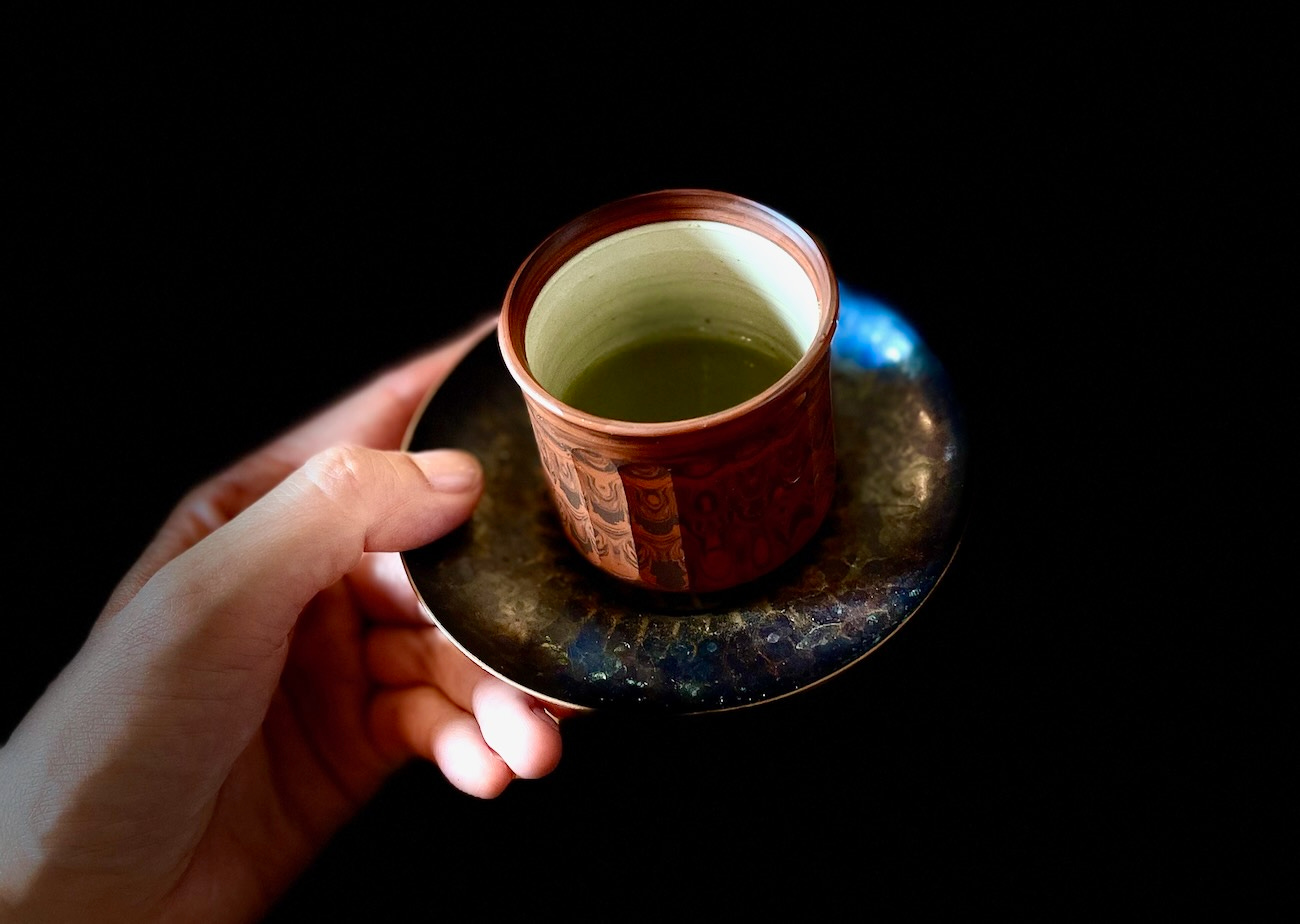
The elderly mediator offered me the first cup of tea. I drew breath, met his eyes, and lifted the bowl with three fingers to my lips—a single, pale, lukewarm mouthful. My tongue and lips shaped the sounds slowly and distinctly; my breath and vocal cords followed. I began to speak of who I was – my profession, my married life, child-rearing, and the love I bore my daughter. To my own ears, my English sounded uncharacteristically slow, almost British in its carefulness, nothing like my usual rapid-fire speech.
From my left, a calm stream of Czech flowed. The interpreter was turning my words into his language. His voice was exceedingly composed.
The mostly level tones of Czech travelled along an invisible ribbon of silk to the mediator’s ear, carrying my life and my feelings. I realised afresh what a remarkable profession interpreting is and how necessary it is to the world.
I felt a small, quiet joy. I, too, was an interpreter. I had not only been carrying words; I had been, in my own way, an unseen bridge between people and between worlds.
DO ALL THINGS WITH LOVE.
The words printed on the first page of the blue notebook rose again in my mind, and I breathed a new, tentative self-acceptance into them.

Yes. Let everything be done with love.
Even this statement. Even now.
The interpreting ended. I began to speak again. This time, I knew, without doubt, that I was talking with love.
To be continued to 1.18. Parallel World - Part 2

Dear Subscribers and Readers,
Thank you for being here, and for reading this far.
What you have just read is not something I planned to write.
It is something I passed through.
At a certain moment, an image surfaced from memory:
a small doorway,
a body bending,
everything unnecessary is left outside.
I did not decide to see the world differently.
I noticed that I already was.
Nothing dramatic changed in the room.
The chairs remained where they were.
The voices sounded the same.
Yet the place from which I was experiencing the world had shifted.
This piece is a record of that shift.
Not an explanation.
Not a lesson.
Just a trace.
If there is anything I hope remains with you,
it is not meaning, but resonance.
Not answers, but a quiet widening.
Thank you for sitting with me in this moment.
With respect,
yukocoolsummer